


FAYUVI is the only therapy approved for MPS IIIA1

What is MPS IIIA?

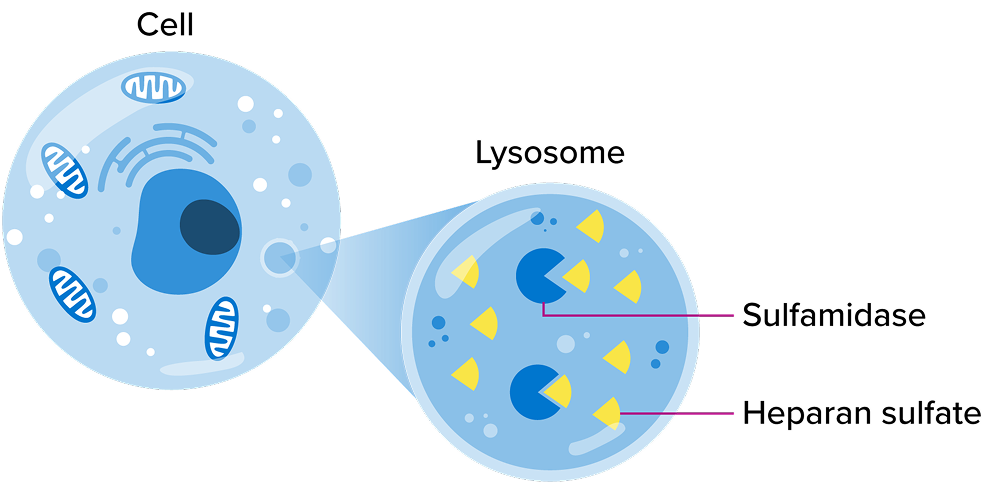
MPS IIIA is a rare, genetic lysosomal storage disorder characterized by severe and progressive neurodegeneration starting in early childhood.2,3 In MPS IIIA, pathogenic variants of the N-sulfoglucosamine sulfohydrolase (SGSH) gene result in absent or dysfunctional sulfamidase, leading to toxic heparan sulfate buildup.4,5

What is FAYUVI?

FAVUVI is an adeno-associated virus serotype 9 (AAV9)-based gene therapy designed to address MPS IIIA at the genetic level by delivering a functional copy of the SGSH gene.1,2

FAYUVI mechanism of action

title unlerline title unlerline

MPS IIIA Pathophysiology4,5

MPS IIIA Pathophysiology
  • Pathogenic variants of the SGSH gene lead to a deficiency in sulfamidase, a lysosomal enzyme necessary for the metabolism of heparan sulfate
  • Lack of functional sulfamidase causes toxic heparan sulfate buildup, leading to cell damage and multisystemic MPS IIIA manifestations

How FAYUVI Is Designed to Work1,4

How FAYUVI Is Designed to Work
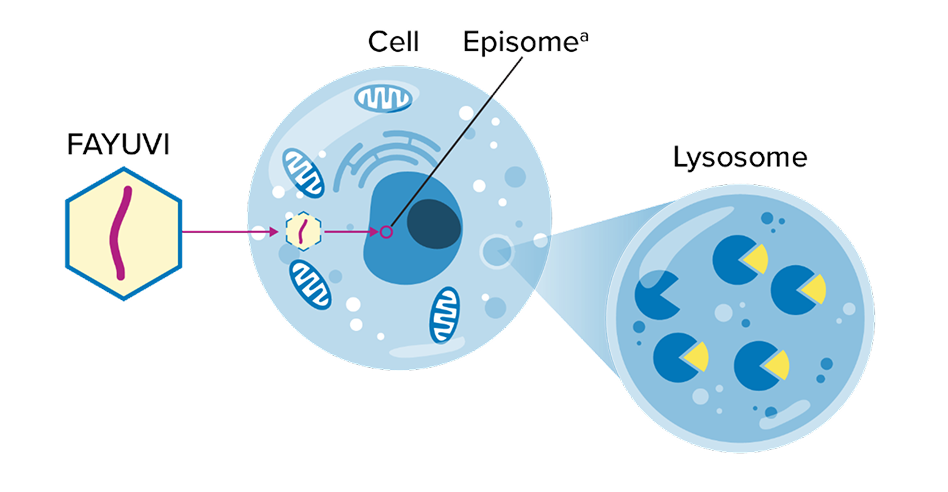
  • FAYUVI is an AAV9-based gene therapy designed to deliver a functional copy of the human SGSH gene to cells. The SGSH gene encodes N-sulfoglucosamine sulfohydrolase, also known as sulfamidase
  • Intravenous infusion of FAYUVI results in production of the lysosomal enzyme sulfamidase in target tissues, with subsequent breakdown of heparan sulfate in lysosomes

aExogenous DNA that remains separate from the cell’s endogenous chromosomes.6

Pharmacodynamics: FAYUVI reduced CSF HS levels1

title unlerline title unlerline title unlerline

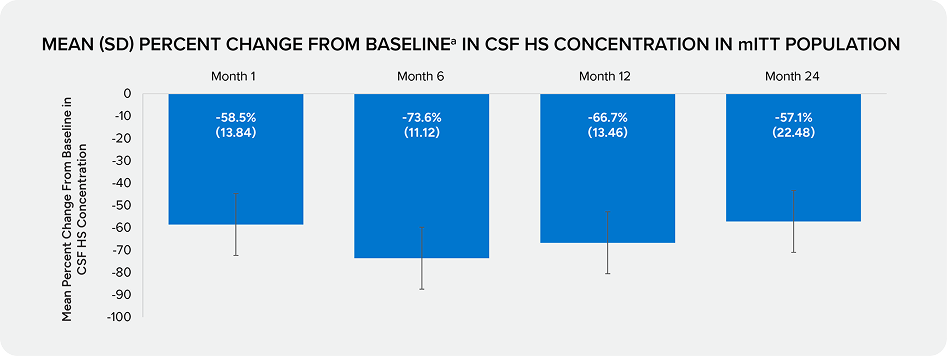
FAYUVI-treated patients (mITT, n=16) experienced a reduction in CSF HS levels at Month 1 and sustained through Month 241

Pharmacodynamics: FAYUVI reduces CSF HS exposure graph

CSF HS EXPOSUREb AT MONTH 24 (mITT population)

−63.78% (11.56)

Mean (SD) percent change
from baseline (N=17)

93.8%

of patients (15 of 16)
maintained a reduction of at least 50%

aIn Study 1, the mean (SD) baseline CSF HS concentration in the mITT population (N=17) was 335.3 (156.9) nmol/L.
bCSF HS exposure represents the time-normalized AUC of the percent change from baseline in CSF HS concentration. In Study 1, the mean (SD) change from baseline in CSF HS exposure was −29.25% (6.92) at Month 1, -60.17 (9.43) at Month 6, -65.02 (9.42) at Month 12, and -63.78% (11.56) at Month 24 in the mITT population (N=17).

Enrollment Form

Enrollment Form

close icon
Patient Enrollment Form
AUC, area under the curve; CSF, cerebrospinal fluid; HS, heparan sulfate; mITT, modified intention-to-treat; MPS IIIA, mucopolysaccharidosis type IIIA; SD, standard deviation.

References: 1. FAYUVI [Prescribing Information]. Novato, CA: Ultragenyx Pharmaceutical Inc; October 2026. 2. Wagner VF, Northrup H. Mucopolysaccharidosis Type III. In: Adam MP, Feldman J, Mirzaa GM, et al, editors. GeneReviews® [Internet]. Seattle (WA): University of Washington, Seattle; 1993-2024. 3. Valstar MJ, Ruijter GJ, van Diggelen OP, Poorthuis BJ, Wijburg FA. Sanfilippo syndrome: a mini-review. J Inherit Metab Dis. 2008;31(2):240-252. 4. Seker Yilmaz B, Davison J, Jones SA, Baruteau J. Novel therapies for mucopolysaccharidosis type III. J Inherit Metab Dis. 2021;44(1):129-147. 5. Sidhu NS, Schreiber K, Pröpper K, et al. Structure of sulfamidase provides insight into the molecular pathology of mucopolysaccharidosis IIIA. Acta Crystallogr D Biol Crystallogr. 2014;70(Pt 5):1321-1335. 6. NEJM Illustrated Glossary. Episome. Accessed October 10, 2026. https://illustrated-glossary.nejm.org/term/episome

INDICATION AND IMPORTANT SAFETY INFORMATION

Indication

FAYUVI™ (rebisufligene etisparvovec-hopf) is an adeno-associated virus (AAV) vector-based gene therapy indicated for the treatment of neurologic manifestations of mucopolysaccharidosis type IIIA (MPS IIIA, Sanfilippo syndrome type A) in pediatric patients with preserved neurodevelopmental function.

Important Safety Information

WARNINGS AND PRECAUTIONS

Hepatoxicity

  • Elevated liver enzymes (ALT, AST, and GGT) were observed in clinical studies of FAYUVI. Prior to FAYUVI infusion, assess liver function by clinical examination and laboratory testing (ALT, AST, GGT, and total bilirubin), and evaluate liver-related medical history. Administer corticosteroids to all patients before and after the FAYUVI infusion. If abnormalities are observed, adjust the corticosteroid treatment regimen, including increasing the dose and/or prolonging the corticosteroid taper period.
  • Closely monitor ALT, AST, GGT, and total bilirubin levels after FAYUVI administration until 2 weeks after the corticosteroid taper is complete and as clinically indicated. Continue to monitor liver function in all patients who develop elevated liver enzymes until levels return to baseline.

Thrombocytopenia

  • Decreased platelet counts were observed in clinical studies of FAYUVI.
  • Prior to FAYUVI infusion, assess platelet counts. Monitor platelet counts weekly for the first 4 weeks, then monthly for 6 months following infusion. Continue monitoring as clinically indicated.

Thrombotic Microangiopathy

  • Thrombotic microangiopathy (TMA) has been reported in association with AAV gene therapies. While there have been no cases of TMA associated with FAYUVI in clinical studies, laboratory and clinical monitoring for TMA following FAYUVI infusion is recommended.
  • Monitor platelet counts closely within the first 4 weeks following FAYUVI infusion. Signs and symptoms of TMA may include, but are not limited to, thrombocytopenia, hemolytic anemia, easy bruising, hypertension, seizures, decreased urine output, and renal dysfunction. If TMA is suspected, immediately consult a pediatric hematologist and/or nephrologist for further evaluation and management as clinically indicated.

Hypersensitivity and Infusion Reactions

  • Infusion reactions, including hypersensitivity reactions and anaphylaxis, may occur with infusion of FAYUVI. Symptoms may include, but are not limited to, hypotension, pyrexia, palpitation, nausea, vomiting, chills, or headache.
  • Closely monitor patients for clinical signs and symptoms of infusion reactions, including hypersensitivity reactions, and monitor vital signs during and after completion of FAYUVI infusion as clinically indicated. In the event of an infusion reaction during administration, pause the infusion and provide supportive care according to clinical practice. If the infusion is paused and continued administration is appropriate, restart at a slower rate after the infusion reaction has resolved.

Risk of Malignancy

  • Malignancy may occur following treatment with FAYUVI due to potential integration of AAV vector DNA into the genome.
  • In the event of a malignancy, contact Ultragenyx Pharmaceutical Inc. at 1-888-756-8657.

ADVERSE REACTIONS

  • The most common adverse reactions are (≥5%): liver enzyme increased (85%), vomiting (67%), abnormal behavior (56%), diarrhea (48%), pyrexia (41%), white cell count decreased (30%), Cushingoid features (30%), decreased appetite (22%), platelet count decreased (19%), anemia (19%), constipation (15%), nausea (11%), amylase increased (11%), alkaline phosphatase increase (11%), seizure (11%), hepatomegaly (11%), muscle spasticity (7%), hypokalemia (7%), gait disturbance (7%), and adrenal insufficiency (7%).

VACCINATIONS

  • Prior to FAYUVI administration, consider the patient’s vaccination status. Vaccines should be avoided 30 days prior to treatment with FAYUVI (and use of corticosteroid) and while on corticosteroid therapy.

PREGNANCY

  • There are no data on the use of FAYUVI in pregnant women. Women who are pregnant or desire to become pregnant should not be treated with FAYUVI. A negative serum pregnancy test must be confirmed before administration of FAYUVI in females of childbearing potential.

VECTOR SHEDDING

  • Temporary vector shedding of FAYUVI occurs primarily through bodily fluids and waste. Advise patients and/or caregivers on proper handling of patient bodily fluids and waste, including hand hygiene after direct contact. These precautions should be followed for 3 months after FAYUVI infusion.

Report negative side effects of prescription drugs to the FDA.
Visit www.fda.gov/medwatch or call 1-800-FDA-1088. You may also report side effects to Ultragenyx Pharmaceutical Inc. at 1-888-756-8657.

Please see the full Prescribing Information for FAYUVI.

The information on fayuvihcp.com is intended for U.S. Healthcare Professionals only. Please confirm you are a U.S. Healthcare Professional.