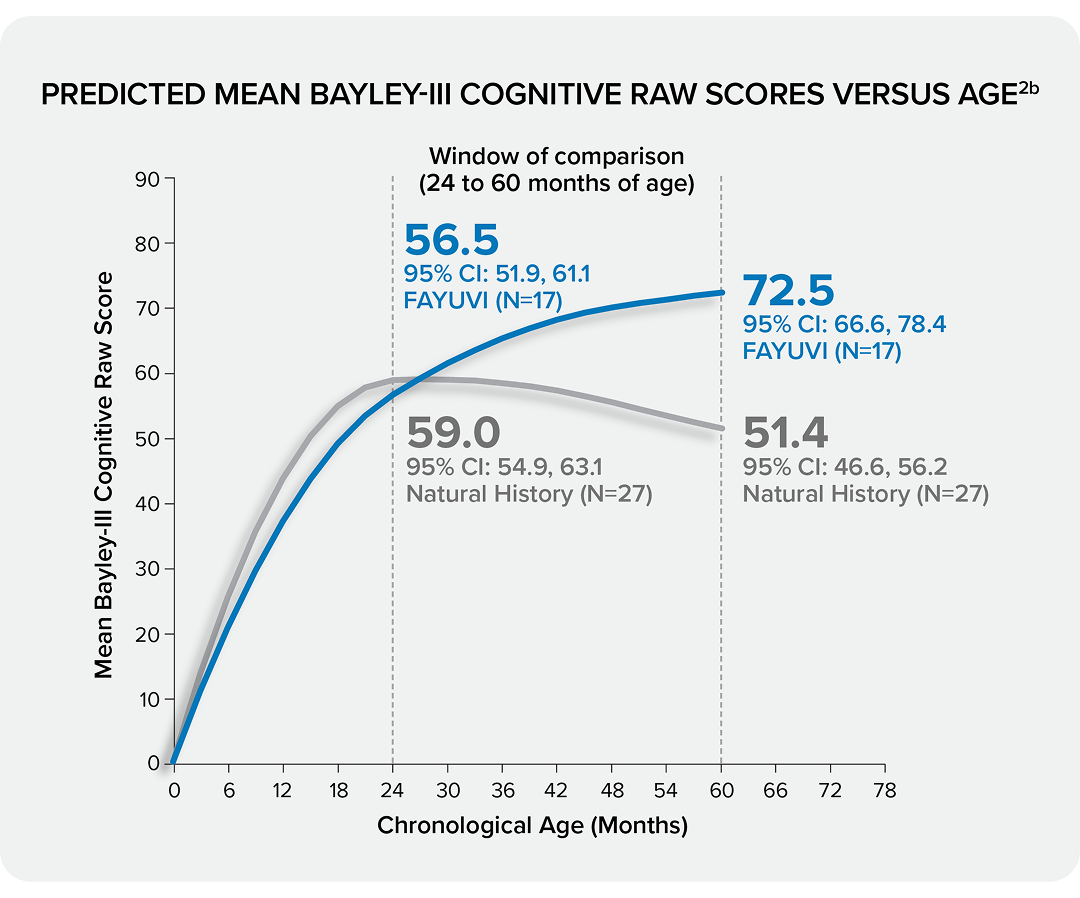
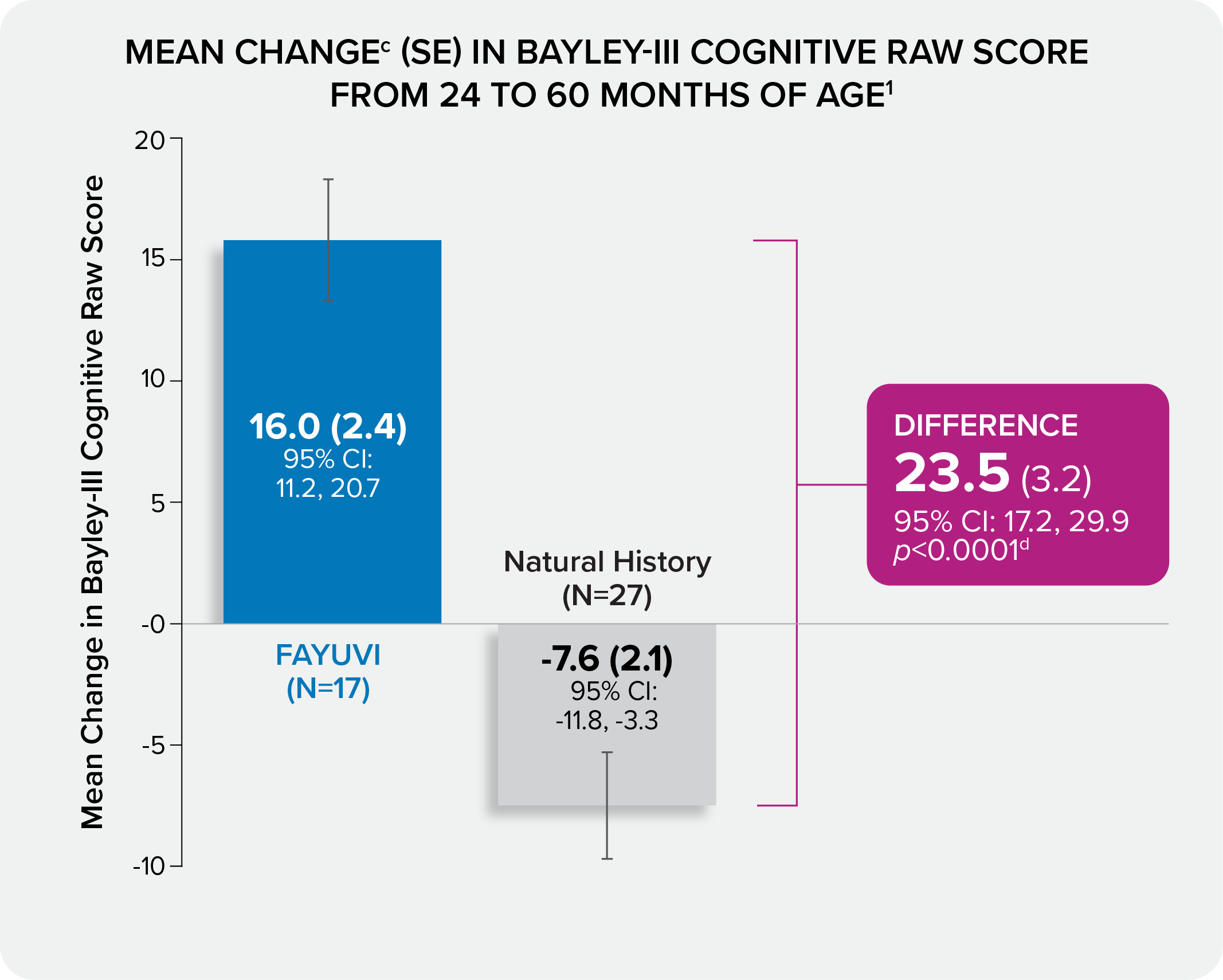


Bayley-III, Bayley Scales of Infant and Toddler Development – Third Edition; CI, confidence interval; mITT,
modified intention-to-treat; SE, standard error.
References: 1. FAYUVI [Prescribing Information]. Novato, CA: Ultragenyx
Pharmaceutical Inc; October 2026. 2. Ultragenyx Pharmaceutical Inc. Data on
file.

Indication
FAYUVI™ (rebisufligene etisparvovec-hopf) is an adeno-associated virus (AAV) vector-based gene therapy indicated for the treatment of neurologic manifestations of mucopolysaccharidosis type IIIA (MPS IIIA, Sanfilippo syndrome type A) in pediatric patients with preserved neurodevelopmental function.
Important Safety Information
WARNINGS AND PRECAUTIONS
Hepatoxicity
- Elevated liver enzymes (ALT, AST, and GGT) were observed in clinical studies of FAYUVI. Prior to FAYUVI infusion, assess liver function by clinical examination and laboratory testing (ALT, AST, GGT, and total bilirubin), and evaluate liver-related medical history. Administer corticosteroids to all patients before and after the FAYUVI infusion. If abnormalities are observed, adjust the corticosteroid treatment regimen, including increasing the dose and/or prolonging the corticosteroid taper period.
- Closely monitor ALT, AST, GGT, and total bilirubin levels after FAYUVI administration until 2 weeks after the corticosteroid taper is complete and as clinically indicated. Continue to monitor liver function in all patients who develop elevated liver enzymes until levels return to baseline.
Thrombocytopenia
- Decreased platelet counts were observed in clinical studies of FAYUVI.
- Prior to FAYUVI infusion, assess platelet counts. Monitor platelet counts weekly for the first 4 weeks, then monthly for 6 months following infusion. Continue monitoring as clinically indicated.
Thrombotic Microangiopathy
- Thrombotic microangiopathy (TMA) has been reported in association with AAV gene therapies. While there have been no cases of TMA associated with FAYUVI in clinical studies, laboratory and clinical monitoring for TMA following FAYUVI infusion is recommended.
- Monitor platelet counts closely within the first 4 weeks following FAYUVI infusion. Signs and symptoms of TMA may include, but are not limited to, thrombocytopenia, hemolytic anemia, easy bruising, hypertension, seizures, decreased urine output, and renal dysfunction. If TMA is suspected, immediately consult a pediatric hematologist and/or nephrologist for further evaluation and management as clinically indicated.
Hypersensitivity and Infusion Reactions
- Infusion reactions, including hypersensitivity reactions and anaphylaxis, may occur with infusion of FAYUVI. Symptoms may include, but are not limited to, hypotension, pyrexia, palpitation, nausea, vomiting, chills, or headache.
- Closely monitor patients for clinical signs and symptoms of infusion reactions, including hypersensitivity reactions, and monitor vital signs during and after completion of FAYUVI infusion as clinically indicated. In the event of an infusion reaction during administration, pause the infusion and provide supportive care according to clinical practice. If the infusion is paused and continued administration is appropriate, restart at a slower rate after the infusion reaction has resolved.
Risk of Malignancy
- Malignancy may occur following treatment with FAYUVI due to potential integration of AAV vector DNA into the genome.
- In the event of a malignancy, contact Ultragenyx Pharmaceutical Inc. at 1-888-756-8657.
ADVERSE REACTIONS
- The most common adverse reactions are (≥5%): liver enzyme increased (85%), vomiting (67%), abnormal behavior (56%), diarrhea (48%), pyrexia (41%), white cell count decreased (30%), Cushingoid features (30%), decreased appetite (22%), platelet count decreased (19%), anemia (19%), constipation (15%), nausea (11%), amylase increased (11%), alkaline phosphatase increase (11%), seizure (11%), hepatomegaly (11%), muscle spasticity (7%), hypokalemia (7%), gait disturbance (7%), and adrenal insufficiency (7%).
VACCINATIONS
- Prior to FAYUVI administration, consider the patient’s vaccination status. Vaccines should be avoided 30 days prior to treatment with FAYUVI (and use of corticosteroid) and while on corticosteroid therapy.
PREGNANCY
- There are no data on the use of FAYUVI in pregnant women. Women who are pregnant or desire to become pregnant should not be treated with FAYUVI. A negative serum pregnancy test must be confirmed before administration of FAYUVI in females of childbearing potential.
VECTOR SHEDDING
- Temporary vector shedding of FAYUVI occurs primarily through bodily fluids and waste. Advise patients and/or caregivers on proper handling of patient bodily fluids and waste, including hand hygiene after direct contact. These precautions should be followed for 3 months after FAYUVI infusion.
Report negative side effects of prescription drugs to the FDA.
Visit www.fda.gov/medwatch or call 1-800-FDA-1088. You may also report side effects to
Ultragenyx Pharmaceutical Inc. at 1-888-756-8657.
Please see the full Prescribing Information for FAYUVI.